

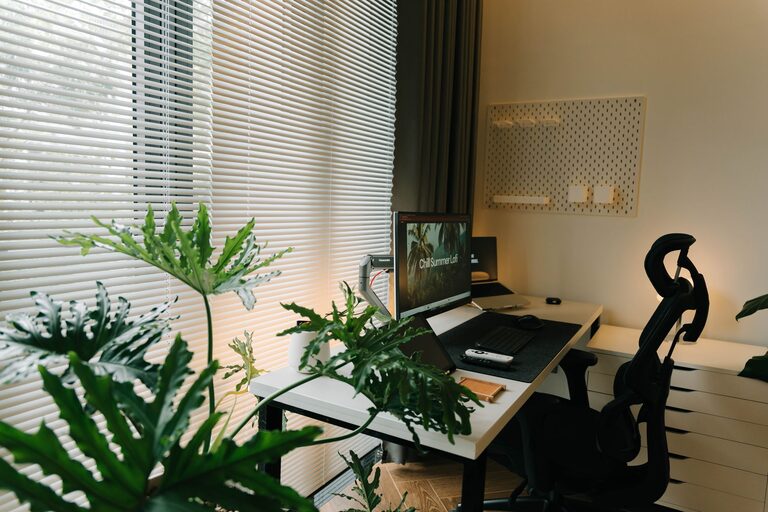
Creating a home workspace that balances relaxation and productivity is essential when working remotely or managing tasks at home. A well-designed workspace can help you stay focused, reduce stress, and improve your overall work experience. Here are some practical tips to help you craft a home workspace that feels comfortable and efficient.
1. Choose the Right Spot
Find a Dedicated Space
Select an area in your home where you can consistently work without distractions. Whether it’s a spare room, a corner of your living room, or a nook by the window, having a dedicated workspace helps your brain distinguish between work and home life.
Consider Natural Light
Natural light has a positive effect on mood and alertness. Try to position your desk near a window to take advantage of daylight. If natural light is limited, invest in good quality lighting that mimics daylight to reduce eye strain.
2. Invest in Comfortable Furniture
Ergonomic Chair and Desk
Comfort is key to staying productive. An ergonomic chair supports your posture and reduces back pain, while an adjustable desk can help you switch between sitting and standing positions throughout the day.
Keep Essentials Within Reach
Organize your desk so that frequently used items, like your computer, notebook, and pens, are easily accessible. This reduces clutter and distractions, making your workflow smoother.
3. Personalize Your Workspace
Add Soothing Elements
Incorporate items that make the space inviting and calm. Plants, artwork, or a small fountain can add a touch of nature and serenity without overwhelming the space.
Use Calming Colors
Colors like soft blues, greens, or neutrals tend to promote calmness and focus. Consider painting the walls or adding accessories in these hues to create a peaceful atmosphere.
4. Minimize Distractions
Manage Noise
Noise can disrupt concentration. If you can’t work in a quiet room, consider using noise-canceling headphones or playing soft background music to mask distractions.
Control Digital Interruptions
Turn off non-essential notifications on your phone and computer during work hours. Keeping your devices set to “Do Not Disturb” mode can help maintain your focus.
5. Organize Your Space
Declutter Regularly
A tidy workspace can help reduce stress and improve clarity. Take a few minutes each day to put things back in place and clear unnecessary items from your desk.
Use Storage Solutions
Install shelves, drawers, or baskets to keep paperwork and supplies organized. Labeling storage makes it easy to find what you need quickly, cutting down on time wasted searching.
6. Prioritize Good Technology
Reliable Internet Connection
A strong and stable internet connection is crucial for remote work. Make sure your router is placed in an optimal spot and consider upgrading your plan if necessary.
Quality Equipment
Invest in a good computer, keyboard, and mouse that suit your work needs. A clear monitor and ergonomic peripherals can reduce fatigue and improve productivity.
7. Incorporate Break Areas
Designate a Space for Breaks
If possible, create a small area separate from your workspace where you can relax during breaks. This could be a comfy chair or a spot for stretching and breathing exercises.
Use Breaks Wisely
Taking short, regular breaks helps maintain focus and reduces burnout. Try the Pomodoro technique—working for 25 minutes, then resting for 5 minutes—to keep your energy levels steady.
8. Establish a Routine
Set Work Hours
Maintaining a consistent schedule helps separate work time from personal time. Define your working hours and stick to them to encourage work-life balance.
Begin and End Your Day Mindfully
Start your day with a simple routine, like a cup of tea or light stretching, to set a positive tone. Similarly, end your day by tidying your workspace, signaling that work is done.
Conclusion
Designing a relaxing and productive home workspace doesn’t require a complete overhaul. Small changes, like choosing the right spot, organizing efficiently, and personalizing your space, can make a big difference. Remember, your workspace should support your work habits and wellbeing, making every workday more enjoyable and efficient. With these tips, you can create an environment where focus and relaxation flow together seamlessly.